Football Transfer Fees in 2026: Why Players Cost So Much
Alexander Isak went for £125m. Elliot Anderson for £116m. Sandro Tonali for £100m. Football transfer fees have never been higher. Here is how it got here and what is driving the numbers.


The summer of 2025 ended with Liverpool paying £125 million for Alexander Isak, a British transfer record at the time. Within twelve months, Manchester City broke their own record by paying £116 million for Elliot Anderson, a midfielder who left Newcastle without a sell-on clause, which Newcastle are now quietly regretting.
Tottenham, a club with no Champions League football next season, spent around £100 million on Sandro Tonali, a player who served a ten-month gambling ban just two years ago. And this summer's window has barely got going.
Something has changed in football's transfer market, and it did not happen overnight.
How the Premier League got so far ahead
The top five European leagues, England, Spain, Germany, Italy and France, spent a combined total of over €8 billion on transfers in the 2025-26 season alone. Almost half of that came from Premier League clubs.
When you look at the 20 most expensive deals in world football that season, 15 of them involved a Premier League club buying. Nine of the top ten were Premier League deals. That gap between England and everyone else is not an accident. It is the result of how broadcast money, commercial revenue and competition for the same small pool of elite players have combined over roughly fifteen years.
The Premier League's domestic broadcast deal, shared among all twenty clubs, gives even the bottom side more guaranteed income than most clubs in La Liga, the Bundesliga or Serie A. When Florian Wirtz left Leverkusen for Liverpool in the summer of 2025 for €125 million, it set a new record for a Bundesliga departure. Bayern Munich, the biggest club in Germany, spent €100 million on Harry Kane in 2023 and that was the first time any German club had ever paid nine figures for a single player. Premier League clubs have been doing it routinely for years. That spending power sets the price of players across the whole market, because clubs in other leagues know that if they hold out long enough, an English club will come in with a number that others simply cannot match.
What is really driving the fees
When a fee like £116 million for Elliot Anderson comes up, the natural reaction is to question whether any midfielder is worth that. The more useful question is: worth it to whom, and compared to what? Transfer fees are not set in a vacuum. They come from what a club believes it will gain commercially, competitively and over the length of a contract, weighed against what another club is willing to pay for the same player.
City paid that figure partly because Arsenal were in the running and City could not afford to let Arsenal get stronger. The competitive context pushed the number higher than the player's raw output would suggest.
Age is now one of the biggest factors in how fees are set. When you look at the most expensive transfers in world football right now, nearly every player in that group is under 25. Clubs are not just paying for what a player does today; they are paying for the five or six peak years they expect to get from a young player, plus the resale value at the end of his contract if they decide to move him on. Joao Felix went from Benfica to Atletico Madrid for €127 million in 2019 at nineteen years old. That fee was not for what he had done at Benfica. It was for what Atletico believed he could become.
That model has only become more common since then.
Agents, too, are a big part of why fees keep going up. As player values have grown, so has the leverage agents hold over both clubs and players. An agent who represents a player with two years left on his deal can create a situation where the selling club either sells now at a high fee or risks losing him cheaply when the contract winds down.
Newcastle found themselves in that position repeatedly with Isak, Tonali, Anderson and Anthony Gordon, all of whom left within a short window. The selling club often ends up taking the best available offer rather than the one they actually wanted.
What the other leagues are doing
La Liga spent less than €900 million in the 2025-26 transfer window, which put them behind not just the Premier League but also Serie A, the Bundesliga and Ligue 1. Barcelona's financial problems have kept them largely out of the big-fee market for years, relying instead on deferred payments, sell-on clauses and creative accounting structures that UEFA's financial rules have repeatedly flagged.
Real Madrid have been more active but largely on targeted buys: Alvaro Carreras from Benfica for €50 million, teenager Franco Mastantuono from River Plate for €45 million. Both clubs picked up Trent Alexander-Arnold and Kylian Mbappe on free transfers in recent windows, which is the smartest business in world football over the last three years.
The Bundesliga's approach is different by design. German clubs generally spend within their means, develop young players through well-run academies, and sell at a profit when the big Premier League clubs come calling. Wirtz at Liverpool, Luis Diaz at Bayern this season, Jamal Musiala staying at Bayern on improved terms rather than leaving: the German model is built on not overpaying, and it largely works, even if it means watching their best players go to England eventually.
Serie A has been squeezed the hardest. Italian clubs have the commercial income and fanbase to compete for good players, but not the broadcast revenue to match Premier League fees. The biggest departures from Serie A in recent seasons have involved clubs selling rather than buying: Inter selling Lukaku to Chelsea for €115 million in 2021 remains the most expensive departure from an Italian club ever.
The Ceiling
Neymar's €222 million move from Barcelona to PSG in 2017 is still the world record. Nobody has come close to it in the nine years since. The record has not been broken because the market found a different way to grow: instead of one enormous fee, clubs now pay very large fees for many players at once.
Liverpool spent £480 million in the summer of 2025 across their whole rebuild. The price of building a squad has gone up far faster than the price of a single transfer record.
The fees that raise eyebrows most in this window are not at the very top. They are in the middle range: £85 million for Mateus Fernandes from West Ham to Tottenham, around €50 million for teenage defenders and wide players with limited top-level experience.
When you can pay that kind of money for a player with twenty competitive appearances, it tells you the market has stretched all the way down. The clubs benefiting most from that stretch are the smart sellers like Brighton, who have turned player trading into a business model, Benfica, who develop South American talent for European clubs, and Sporting CP, who recently set a new record for the most expensive sale between two Portuguese clubs.
Broadcast deals keep growing. Commercial revenue keeps growing. The pool of genuinely elite young players stays roughly the same size. When more money chases the same number of players, fees go up. That has held for thirty years and nothing on the horizon suggests it is about to change.
WHAT YOU SHOULD READ NEXT

Who is Michael Jackson, Burnley's new interim boss?
Burnley have parted ways with Scott Parker by mutual consent following their Premier League relegation and named Michael Jackson as interim manager for the final four games of the season. Here is everything you need to know about him.
Lamine Yamal Childhood in the Spotlight: Inside a Modern Prodigy’s Rise
From a record-breaking Barcelona debut to global fame before 18, this piece explores Lamine Yamal’s early career, family background, trophies, and the spotlight shaping his journey.

France's new Ligue 3 explained: What it is, how it works and why it matters
France's Championnat National becomes Ligue 3 from the 2026-27 season, making it the country's first fully professional third-tier league. Here is a full explainer on the format, governance, broadcast deal, salary cap and what changes for clubs below.
David Raya vs Unai Simon: Why Spain's Best Goalkeeper Is Still on the Bench
David Raya has 21 clean sheets this season and is being called the best goalkeeper in the world in England. Unai Simon has seven. Spain are still going to the World Cup with Simon. Luis de la Fuente's reasoning, examined.
Comments (0)
Latest Posts
Ranking The NBA's Biggest Regret Trades Of The 2020s
It only takes one trade to turn a franchise around, just like it only takes one wrong move to undo years of planning. Here are five of the worst trades in the NBA so far in the 2020s

Sorloth, Haaland and Norway's World Cup Exit: The Risk of Playing Two Strikers
Alexander Sorloth had Erling Haaland free in a 2-on-1 and went alone. Norway lost 2-1 to England and went home. It explains everything about the challenge of pairing two natural strikers.

Rookies Are Making a Statement — Here’s What Summer League Has Revealed So Far
The NBA Summer League is well and underway and the rookies from the 2026 draft class are already proving their brilliance on the court.
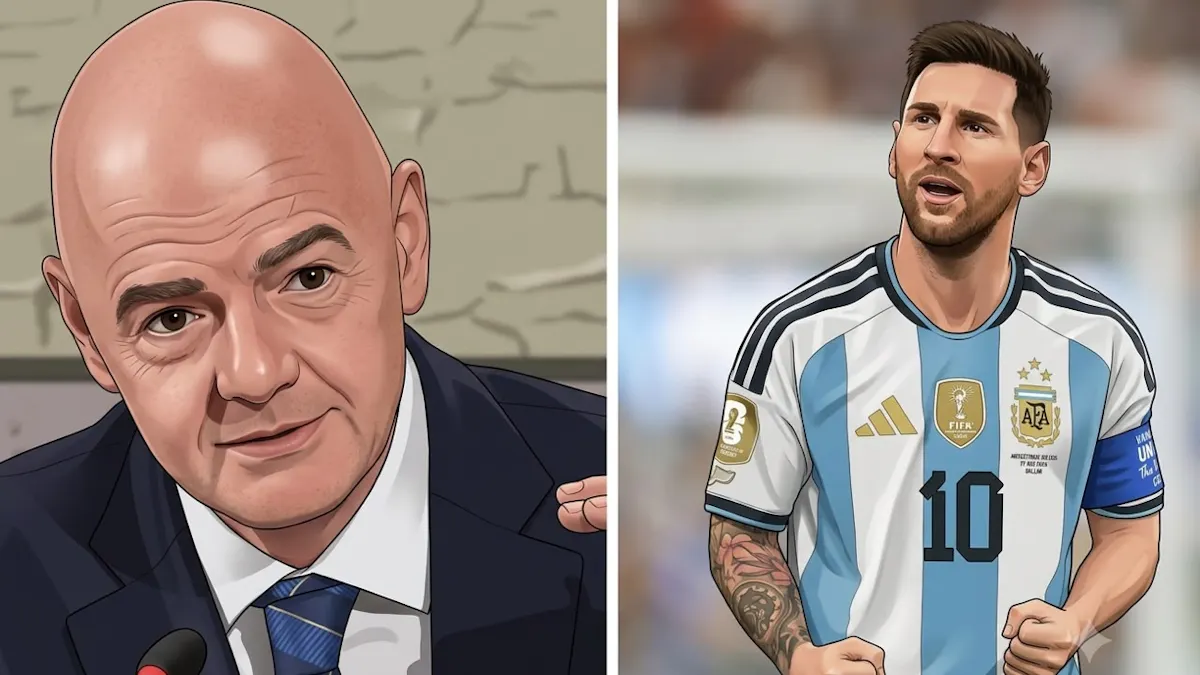
Messi, Infantino and the FIFA World Cup bias
Gianni Infantino said he suffered with Argentina. Algeria filed a complaint. The 2022 World Cup produced five Argentine penalties. Here is everything behind the FIFA favouritism debate surrounding Lionel Messi and Argentina.
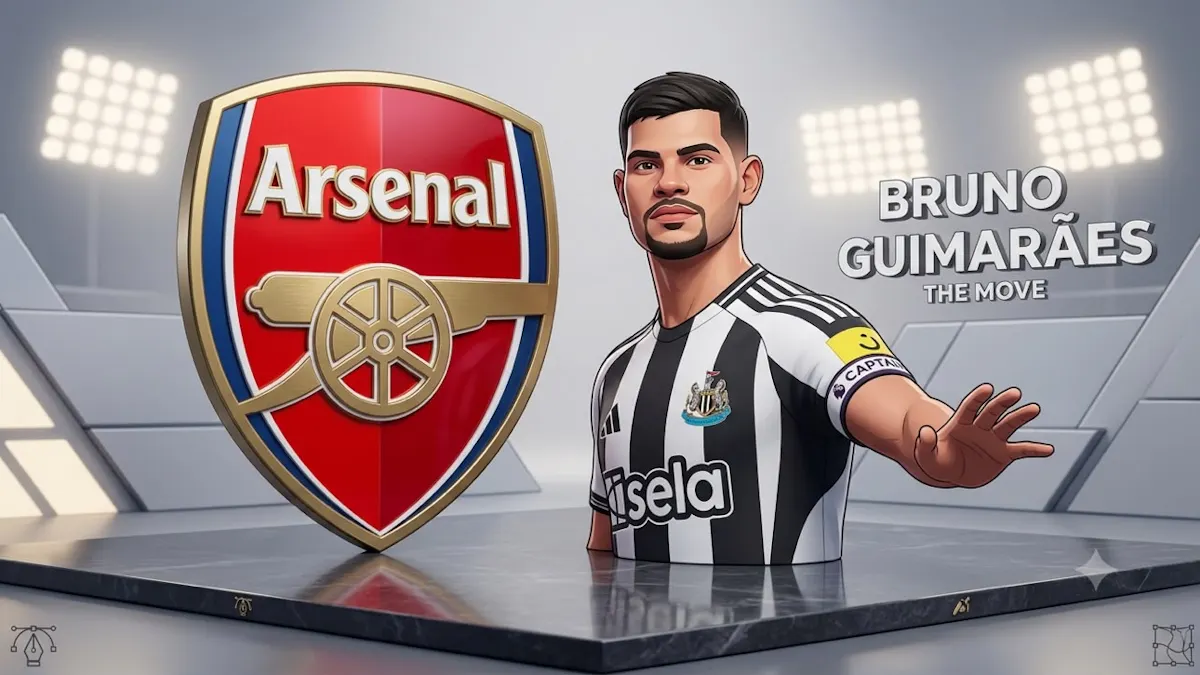
Tapping Up, Transfer Leaks and Bruno Guimaraes: Why the Premier League's Rules Are Being Ignored
Premier League Rules T.5 and T.6 ban clubs and agents from approaching contracted players. Recent transfer saga shows why those rules need teeth. Here is how tapping up actually works, and why nobody gets punished.
More from this Category
Trophies, Trust and Argentina: Why Lionel Scaloni is the World Cup's Most Underrated Coach
Lionel Scaloni won the World Cup, back-to-back Copa Americas and changed how Argentina play. So why does nobody talk about him? Here is the full story of the coach who rebuilt a nation.
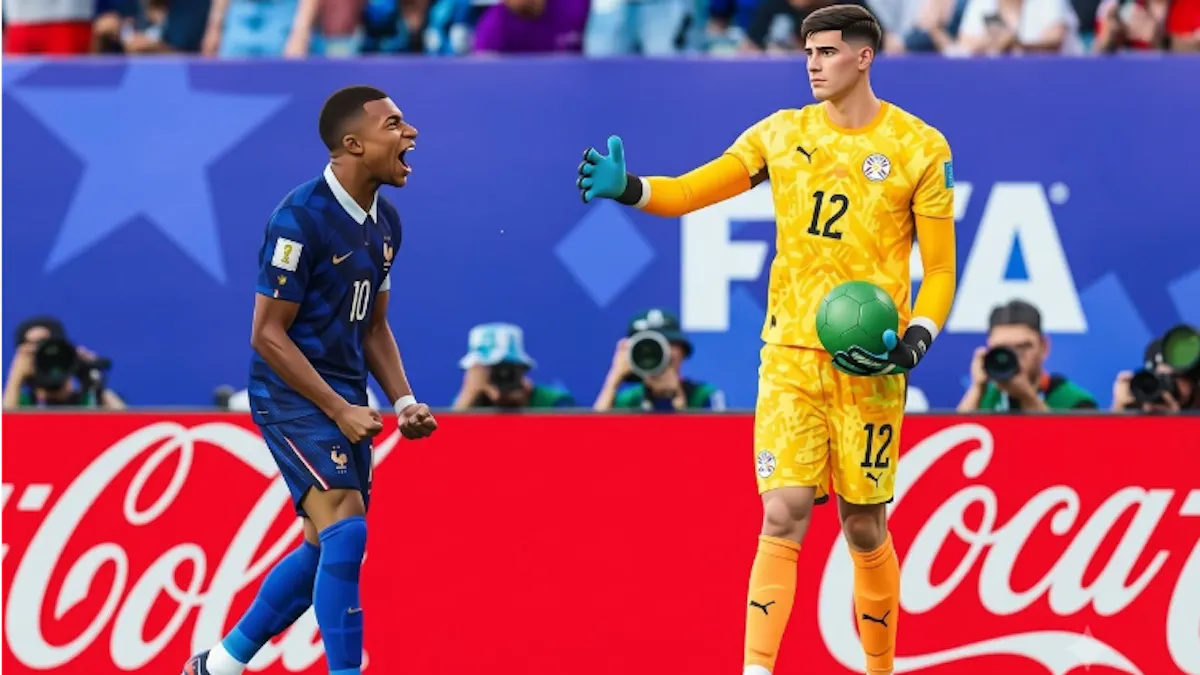
Kylian Mbappe: When football is no longer just about football
Goals and trophies no longer define a superstar alone. From Mbappe's World Cup headlines to Vinicius Junior's Ballon d'Or controversy, modern elite footballers are judged on everything, including who they are off the pitch.
More on premier-league
The Haaland question: Does a striker need more than goals?
Haaland’s scoring brilliance is undisputed, but modern football demands more. Can City’s striker impact the team beyond the box?
Chelsea fined £10.75m and given suspended transfer ban: Did the Premier League get it right?
Chelsea made £47.5m in secret payments under Roman Abramovich and walked away with a fine and a suspended ban. With Everton and Forest both docked points for lesser offences, the Premier League has some serious questions to answer.
Six red cards, one season and Chelsea’s growing problem
Chelsea have seen six players sent off this season, raising serious questions about control and decision making.
Carrick or Solskjær: Who Can Fix Manchester United?
Michael Carrick is now Manchester United’s interim manager. His style or Ole Gunnar Solskjær’s attacking approach, which is better to help the team get back on top?
More on la-liga
Major Trophies in Football and their Worth
Major football trophies are the ultimate symbols of success in the game, separating legends from the rest through triumphs at club, continental, and global level.

Simeone and Atletico: five years without a trophy, and the question nobody in Madrid can ignore
Arsenal knocked Atletico Madrid out of the Champions League semi-finals on May 5, completing another trophyless season for Diego Simeone. With no La Liga, no Copa del Rey and no UCL since 2021, the question of where this partnership goes next is impossible to avoid.
The MSN Era: When Barcelona Ruled Football With Pure Firepower
The MSN era saw Messi, Suárez, and Neymar turn Barcelona into the most feared attacking force in world football, combining flair, balance, and efficiency.

Real Madrid vs Barcelona and the meaning of El-Ćlasico
A look into the history, global power and modern stakes of El Clasico ahead of the January 11, 2026 showdown, exploring why Real Madrid vs Barcelona remains football’s greatest rivalry.
Cristiano Ronaldo sends UD Almeria from 400k to 3 million social media followers overnight
Cristiano Ronaldo buys a 25% stake in UD Almeria, and the club’s Instagram explodes from 400,000 to nearly three million followers in 24 hours, showing the massive global influence he still brings to football.
Try These Trivia
Only True NBA fans will Pass these Trivia
These are easy trivia question on NBA; come here and prove how well you know the basketball teams and their players.
Tell us how deep your Arsenal ties go with this Trivia
Arsenal fans are known for their loyalty; they are also known for being among the best players and team that is always hopeful for a trophy. Prove your loyalty to arsenal by passing this simple Trivia test.