Manchester City’s Derby Win Raises Bigger Questions After VAR Controversy
Manchester City beat Manchester United at Old Trafford, but VAR controversy over Haaland’s goal raises fresh questions about the review process.


Manchester City walked out of Old Trafford with a remarkable 1-0 win over Manchester United, but what really got people talking was not Erling Haaland's winning goal or the fact that they had a ten-man advantage, but something else entirely.
It was VAR.
Phil Foden was sent off in the 23rd minute after his clash with Bruno Fernandes and City were forced to play with a numerical disadvantage for much of the game. Despite the ten-man side, Enzo Maresca's team was able to maintain their form, take the pressure from United and make the breakthrough in the second half via Haaland.
There was much to take in for City. Playing a Manchester derby away from home with ten men requires more than technical quality. They had to defend, control the tempo and take some pressure at times, especially when Mainoo hit the post.
The midfield pairing of Elliot Anderson and Enzo Fernández was key. City were short of a player and had to rely on discipline as much as creativity, and the two kept them well organised when United were seeking an equaliser.
That's where the win deserves the credit.
However, it would be hard to talk about the game without dividing the game from the incident that ultimately decided it.
ALSO READ LALIGA AND PREMIER LEAGUE NEW RULES AND CHANGES

La Liga and Spanish Football’s New IFAB Rules for 2026-27: Everything You Need to Know
La Liga adopts some major IFAB rule changes for 2026-27, covering substitutions, goalkeeper injuries, penalties, time-wasting, and expanded VAR. Here is what each rule means and why it was introduced.

Premier League VAR Changes 2026-27: Referee Audio, KMI Panel and What They Mean
The Premier League is introducing some major VAR transparency changes this season. Here is what is changing, how each one works, and whether it will make a real difference.
Haaland Was Onside, But That Was Not the Whole Incident
Haaland was initially flagged offside when he scored, but VAR subsequently reversed the call after establishing the striker was onside.
This should have been the start of the review, not the end.
Fernández was also in an offside position and ran towards the ball, diving across the attacking phase. It was not a matter of whether Haaland was onside or not. It was whether Fernández, who did not touch the ball, had interfered with the defenders or goalkeeper.
Fernández's movement put him in the line of the play and directly involved him in the action. Goalkeeper Senne Lammens' view and reaction were affected, as was Lisandro Martínez's movement. This should be ruled as offside according to the offside rule
VAR had the opportunity to examine the entire sequence.
Rather, the question of the review was whether Haaland was offside himself.
This is the part that is riling up football fans
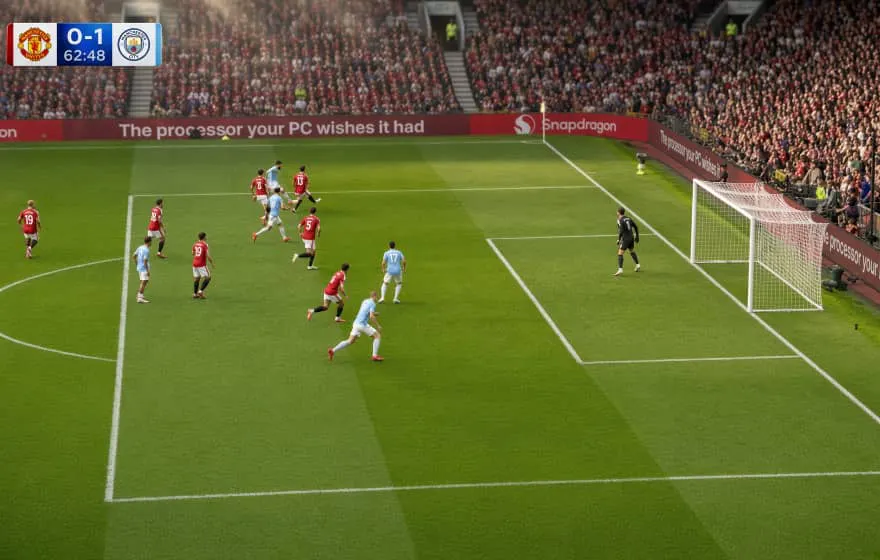
Enzo Fernandez and Haaland positioning
More Time Should Have Produced a Better Decision
Pro Ref has described the whole situation as an error of judgment; the VAR officials who were officiating during the derby were stood down, and Howard Webb described the failure as "tunnel vision."
That explanation makes no sense, and it also exposes the bigger problem.
VAR was adopted in order to slow down moments that are too important to leave to a quick on-field decision. Provides officials with extra angles, reels, and time to view an incident from various angles.
But in this case, more time did not yield more comprehensive conclusions.
The VAR was able to identify that Haaland was onside, answering the first offside question
It did not correctly respond to the second question: Was another player offside when the ball was played?
A player does not need to have contact with the ball to be involved in an offside call. Movement can be significant when it hinders an opponent or affects the goalkeeper's ability to play the ball.
So Fernández's involvement, subject to an eye test, was in an offside position, let alone VAR review.
ALSO READ

The Ballon d’Or Shortlist Exposes the Premier League’s Lack of Attacking Superstars, But 2026-27 Could Change the Story
The 2026 Ballon d’Or shortlist raises questions about the Premier League’s attacking talent, but early-season form from Haaland, Isak, Odegard and Joao Pedro and others could change the picture.

Eleven games to save a season in the Premier League
Only a few points separate four clubs and only eleven matches left, one bad run could turn a difficult season into a fight for Premier League survival by March.

Como’s Champions League Rise: What Cesc Fàbregas’ Project Really Says About Modern Football
Como’s 4-1 win over RB Leipzig highlights how smart recruitment, financial backing and Cesc Fàbregas’ tactical vision are reshaping the club, while showing how far they can realistically go in Europe.

Lens, PSG and the Trophée des Champions: How a 10-Man Side Beat the Champions of Europe
RC Lens beat PSG 1-0 in the 2026 Trophée des Champions despite playing with 10 men for over 50 minutes. Luis Enrique said his team was superior. Here is what we saw in the match.
The Foden Red Card Is a Separate Debate
Foden's red card is a whole other ballgame.
There is room for disagreement over whether his action warranted a red card. The intensity of that force, the kind of contact made, and the nature of the contact and reaction between the players is debatable.
One could argue that Michael Oliver's red card was solely based on Foden's aggression towards Burno after kicking him; others could say he reacted based on Burno Fernandes kicking him first, but there's no doubt both should have been punished.
The VAR decision on the goal is different as it focuses on whether the offside interference test was applied correctly.
The first is a matter of disciplinary judgment.
The other is a question of whether the officials completed the review.
That distinction is important because not all controversial decisions are the same type of officiating issue.
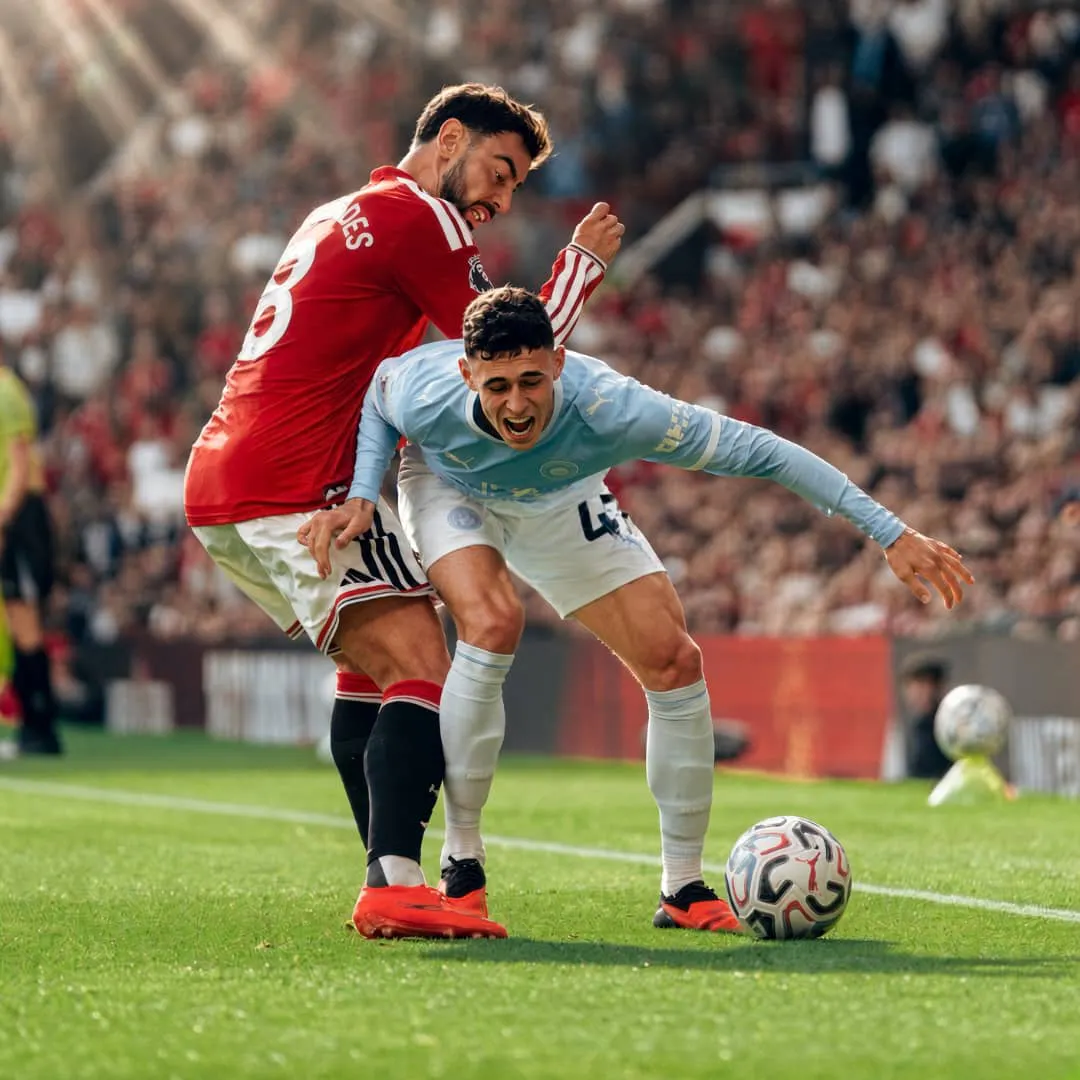
Burno and Foden challenge
United Pay the Price
They sit on four points, City move on 12 points from their first four games, and are level with Arsenal. In a league where small differences in score can make a difference in the title race and European spots, one controversial goal can mean more than just an afternoon.
United could have taken a point from the derby. Instead, they left empty-handed after a match in which they had a numerical advantage for most of the contest.
But that doesn't mean City didn't deserve some accolades. They still had to defend their lead, survive United's pressure, and produce the moment that separated the teams.
But it is equally wrong to pretend the VAR controversy did not change the entire game.
An apology can acknowledge an error, and standing down officials can show that the incident has been taken seriously. But neither of these after-match actions changes the result.
The point is gone. The derby is gone. The 3 points remain in the record for City.
Comments (0)
Latest Posts

Hull City, Maribor and Acun Ilicali: Is This the Future of Football Club Ownership?
Hull City are third in the Premier League. Maribor lead the Slovenian top flight. Both clubs belong to the same Turkish media mogul. Here is how Acun Ilicali is building something most football owners never attempt.
The Ballon d’Or Shortlist Exposes the Premier League’s Lack of Attacking Superstars, But 2026-27 Could Change the Story
The 2026 Ballon d’Or shortlist raises questions about the Premier League’s attacking talent, but early-season form from Haaland, Isak, Odegard and Joao Pedro and others could change the picture.
Como’s Champions League Rise: What Cesc Fàbregas’ Project Really Says About Modern Football
Como’s 4-1 win over RB Leipzig highlights how smart recruitment, financial backing and Cesc Fàbregas’ tactical vision are reshaping the club, while showing how far they can realistically go in Europe.
Eleven games to save a season in the Premier League
Only a few points separate four clubs and only eleven matches left, one bad run could turn a difficult season into a fight for Premier League survival by March.

Ronaldo vs Messi: career goals, trophies, Ballon d'Or wins and the GOAT debate
Cristiano Ronaldo reached 973 career goals winning the Saudi Pro League with Al Nassr. Lionel Messi has 910 goals, eight Ballon d'Ors and 46 trophies at Inter Miami. Here is the full GOAT breakdown as both men continue playing in 2026.
More on manchester-united

Hull City 2-0 Manchester United: Five Things That Went Wrong for Carrick’s Side on Opening Day
Manchester United lost their Premier League opener to newly promoted Hull City at the MKM Stadium. Here are five reasons why Michael Carrick’s side were beaten on a chastening afternoon in Yorkshire.

Where Does Bruno Fernandes Rank Among the Best Midfielders in the World?
Bruno Fernandes continues to prove he's among the world's elite midfielders with his goals, creativity and memorable performances

The Sacking Culture: Why Elite Football's Patience Has Run Out
Modern football management is increasingly defined by extreme impatience, with elite clubs sacking coaches after months rather than years.

Carrick or Solskjær: Who Can Fix Manchester United?
Michael Carrick is now Manchester United’s interim manager. His style or Ole Gunnar Solskjær’s attacking approach, which is better to help the team get back on top?
More on match-analysis
Lens, PSG and the Trophée des Champions: How a 10-Man Side Beat the Champions of Europe
RC Lens beat PSG 1-0 in the 2026 Trophée des Champions despite playing with 10 men for over 50 minutes. Luis Enrique said his team was superior. Here is what we saw in the match.

Premier League clubs’ Champions League struggles: What went wrong?
No Premier League side won their Champions League round of 16 first leg. Beyond the individual collapses, there’s a structural problem with England’s football calendar that’s been hurting English clubs in Europe for years.
More on analysis

Trophies, Youth and Luis Enrique: Can PSG Win a Champions League Threepeat?
PSG won back-to-back Champions Leagues in 2025 and 2026. Only Real Madrid and Bayern Munich have ever won three in a row. Here is whether Luis Enrique's side can join them.

FIFA Presidency: Six Candidates Who Could Replace Infantino
Norway has formally called for Gianni Infantino's resignation. UEFA, CONCACAF and AFC have joined the revolt. With a March 2027 election approaching, Sportsbuzzfeed looks at who could lead world football next.

Venezia FC in Serie A: Drake, €100m war chest, and a point to prove
Venezia FC are back in Serie A after winning the Serie B title with 82 points. With Drake, Tim Leiweke and a €22m record signing already in, the Winged Lions are not here just to survive.
La Liga and Spanish Football’s New IFAB Rules for 2026-27: Everything You Need to Know
La Liga adopts some major IFAB rule changes for 2026-27, covering substitutions, goalkeeper injuries, penalties, time-wasting, and expanded VAR. Here is what each rule means and why it was introduced.
Try These Trivia

Test your knowledge of the greatest league in the world
Put your Premier League knowledge to the test with 10 questions covering legendary players, iconic moments, records, clubs and unforgettable moments from the greatest league in the world.

Only True NBA fans will Pass these Trivia
These are easy trivia question on NBA; come here and prove how well you know the basketball teams and their players.

Tell us how deep your Arsenal ties go with this Trivia
Arsenal fans are known for their loyalty; they are also known for being among the best players and team that is always hopeful for a trophy. Prove your loyalty to arsenal by passing this simple Trivia test.

